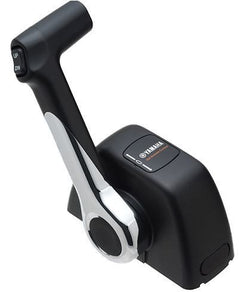

The Complete Guide to Boat Throttle Controls (Outboard Throttle & Shift)
If you want a smoother, more responsive boating experience, understanding how boat throttle controls work is a great place to start. Throttle and shift controls affect safety, docking control, fuel efficiency, and how confidently you can maneuver in tight spaces.
Quick answer: Most boats use a lever system that combines shift (forward, neutral, reverse) and throttle (engine speed). Older systems use mechanical cables, while newer systems use digital or electronic throttle and shift controls that replace long cable runs with electronic signaling for smoother response and easier multi-engine or multi-station integration.
What are outboard throttle controls?
Outboard throttle controls regulate engine RPM and usually handle shifting into forward, neutral, and reverse through the same control at the helm. In simple terms, the control box is the command center that turns your hand movement into what the engine actually does.
That means throttle controls affect more than just speed. They influence how your boat leaves the dock, how cleanly it shifts, how easy it is to hold a slow trolling pace, and how confident you feel in close-quarters maneuvering.
How do you use the throttle on a boat?
For most single-lever setups, the process is straightforward:
- Start with the control in neutral
- Shift deliberately into forward or reverse
- Increase throttle smoothly instead of jamming the lever
- Reduce speed early when approaching a dock or other boats
Small movements make a big difference, especially around marinas, trailers, and boat ramps. Smooth inputs help passengers stay balanced and reduce unnecessary strain on the driveline.
Key features many boat throttle controls include
Exact features vary by control family, but many systems include some combination of the following:
- Single-lever throttle and shift: one handle controls both engine speed and gear selection
- Throttle-only or neutral warm-up mode: raises RPM while the engine stays in neutral for warm-up
- Trim/tilt switch in the handle: lets you adjust engine angle without moving your hand away from the control
- Throttle friction adjustment: changes how firm or loose the lever feels
- Integrated stop lanyard on some control families: adds a quick engine shutoff option if the operator is displaced
Basic components of a throttle control system
Mechanical systems
- Control box: the helm-mounted throttle and shift unit
- Throttle cable and shift cable: physical cables running from the helm to the engine
- Engine-side linkages: convert cable movement into throttle opening and shift movement
Digital or electronic systems
- Digital control box: electronic helm control instead of a cable-only lever
- Harnesses and modules: connect the control to the engine and related rigging
- Integrated system logic: supports smoother response and easier multi-station or multi-engine rigging
Types of boat throttle controls
Single-lever controls
One lever handles both shifting and throttle. This is the most common layout on modern outboards and is usually the easiest style for everyday boating.
Dual-lever controls
Dual-lever setups separate throttle and shift, or use separate control levers per engine in larger multi-engine applications. They can offer fine control, but they are less common on everyday single-outboard rigs.
Side-mount controls
Side-mount controls install on the side of the console or coaming. They are common on smaller boats, bay boats, and layouts where helm space is tight.
Top-mount or binnacle controls
Top-mount controls sit on top of the console and are common on center consoles, dual consoles, and larger outboard boats. They often feel more natural on boats with a standing helm position.
Mechanical vs. digital throttle controls
Mechanical (cable) controls
Pros:
- Proven and familiar design
- Usually lower up-front parts cost
- Often easier to retrofit on older boats
Cons:
- Cables can stiffen, corrode, or need adjustment over time
- Long cable runs can feel less smooth
- Wear in the system can create slop or delayed response
Digital throttle & shift (DEC/DTS)
Pros:
- Smoother, lighter lever feel
- No long mechanical cable friction
- Easier integration for multi-engine and multi-station setups
- Often better suited to advanced Yamaha digital rigging systems
Cons:
- Higher parts cost
- Compatibility depends on the exact engine and rigging system
- Installation is more system-dependent than a basic cable swap
How throttle and shift work together
On most outboard setups, throttle and shift are linked through one control movement. The lever first engages the transmission direction, then continues into throttle as you move it farther. That is why smooth, deliberate movement matters. You are not just asking the boat to go faster or slower. You are also telling it when to engage gear and how aggressively to do it.
Throttle-only mode and neutral-start basics
Many helm controls are designed around neutral-start behavior, meaning the engine is intended to start with the control in neutral. Some Yamaha control families also include a neutral warm-up or fast-idle function that lets you raise RPM while staying in neutral. That can be useful during engine warm-up, but it is not a maneuvering mode and should not be used to move the boat.
Common throttle control problems
1) Stiff or sticky throttle
Common causes include:
- Corroded or aging throttle and shift cables
- Poor cable routing or tight bends
- Salt buildup at pivots or engine linkages
- Excess lever friction setting
2) Delayed response or lag
On mechanical systems, lag often points to cable stretch, friction, or slop in the linkages. On digital systems, lag is more likely to be a rigging, connection, or module issue and is usually better diagnosed systematically rather than guessed at.
3) Hard shifting
If shifting feels rough or clunky, the problem may be cable adjustment, worn linkages, or an idle speed issue that is making gear engagement harsher than it should be.
4) Engine will not shut off cleanly
If the engine keeps running when the control is returned and the key is turned off, the issue may involve the key switch, stop circuit, or related rigging components. That is something to address early rather than wait on.
Troubleshooting a sticky throttle
- Check lever friction or tension adjustment if your control has one
- Inspect cable routing for sharp bends, pinch points, or binding
- Look for corrosion around the engine-side pivots and linkages
- Verify that the handle returns smoothly toward idle
- If the stiffness remains, plan for cable or control-box service instead of forcing it
Throttle cable adjustment
Throttle and shift cables can lose their ideal adjustment over time. If you notice hesitation, poor return to idle, inconsistent engagement, or a mismatch between lever movement and engine response, cable adjustment may be needed. This is one area where “close enough” is not really good enough. A small adjustment error can affect shifting quality and low-speed control.
How weather affects throttle performance
Marine controls live in a tough environment. Salt encourages corrosion, cold weather can make mechanical systems feel stiffer, and long periods of non-use can make old cables show their age fast. Rinsing exposed parts after saltwater use, checking helm feel regularly, and staying on top of maintenance makes a noticeable difference.
Upgrade costs: what to expect
Costs vary a lot depending on engine model, rigging, station count, and whether you are staying mechanical or moving to a digital system.
- Mechanical control boxes: often land in the few-hundred-dollar range for parts only
- Digital electronic control boxes: commonly cost over $1,000 before installation and supporting rigging parts
- Cables and rigging components: vary by length, control family, and engine setup
The labor side can vary even more than the parts side. A simple mechanical replacement is very different from a full mechanical-to-digital conversion or a multi-station installation.
Single-engine vs. twin-engine controls
Single-engine boats usually use a straightforward single control. Twin-engine and larger boats often use matched controls so each engine can be managed independently when needed. That added control can make docking easier, but it also means fitment and rigging compatibility matter more during upgrades or replacements.
Safety note: engine cut-off (kill switch) lanyard
Many throttle and helm-control setups also work alongside an engine cut-off switch, often called a kill switch lanyard. On many covered recreational boats in the U.S., operators are required to use the engine cut-off switch link while operating on plane or above displacement speed. If your stop switch or lanyard is worn, missing, or intermittent, replace it before your next trip.
For Yamaha-compatible replacements, see the Yamaha Engine Stop Switch Assembly with Lanyard.
When to use a professional installer
DIY replacement can make sense for simple like-for-like swaps, but professional installation is usually the safer move when:
- You are converting mechanical controls to digital controls
- You have twin or triple outboards
- You have more than one helm station
- You are unsure about harness, control-box, or engine compatibility
Choosing the right Yamaha control system
If you are upgrading or replacing controls, the best match depends on your engine family, current rigging, helm layout, and how you use the boat. A basic mechanical setup may be perfect for a simple single-engine rig. A digital system may be the better long-term choice if you want a lighter feel, more integration, or are building out a multi-engine helm.
Helpful starting points:
TL;DR
Boat throttle controls manage engine speed and shifting. Mechanical systems use cables. Digital throttle and shift systems replace those cable runs with electronic signaling for smoother operation and easier integration on advanced setups. If your throttle feels stiff, inconsistent, or unreliable, inspect routing, corrosion, and lever feel first, then decide whether you need cable service, a control-box replacement, or a bigger upgrade.
Frequently Asked Questions
What are boat throttle controls?
Boat throttle controls manage engine speed and usually shifting through a helm-mounted lever or control box.
What is the difference between mechanical and digital throttle and shift?
Mechanical controls use physical throttle and shift cables. Digital systems use electronic signaling, which can deliver a smoother lever feel and easier multi-engine or multi-station integration.
What are signs of a sticky or failing throttle control?
Common signs include a stiff lever, delayed response, poor return to idle, difficult shifting, or inconsistent control feel.
What is throttle-only mode?
Throttle-only mode lets the engine rev higher while staying in neutral for warm-up. It is not meant for maneuvering the boat.
Do I need a professional to install throttle controls?
Professional installation is a smart idea for digital conversions, multi-engine rigs, or multi-station setups where compatibility and calibration matter more.
Are engine cut-off lanyards required?
On many covered recreational boats in the U.S., yes. Operators are generally required to use the engine cut-off switch link while operating on plane or above displacement speed.