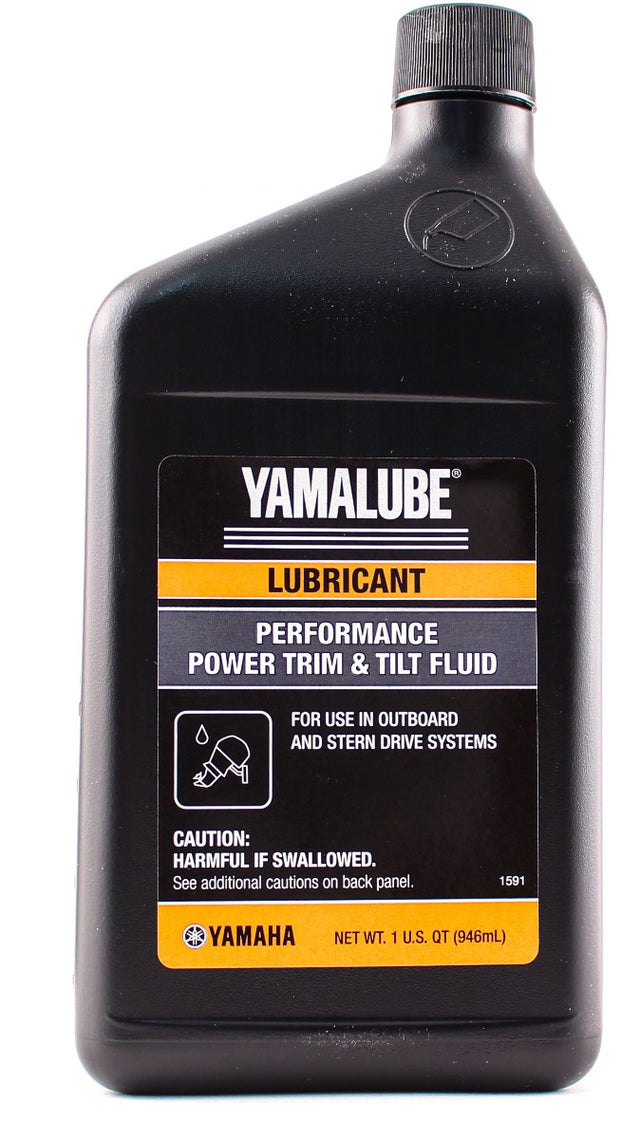
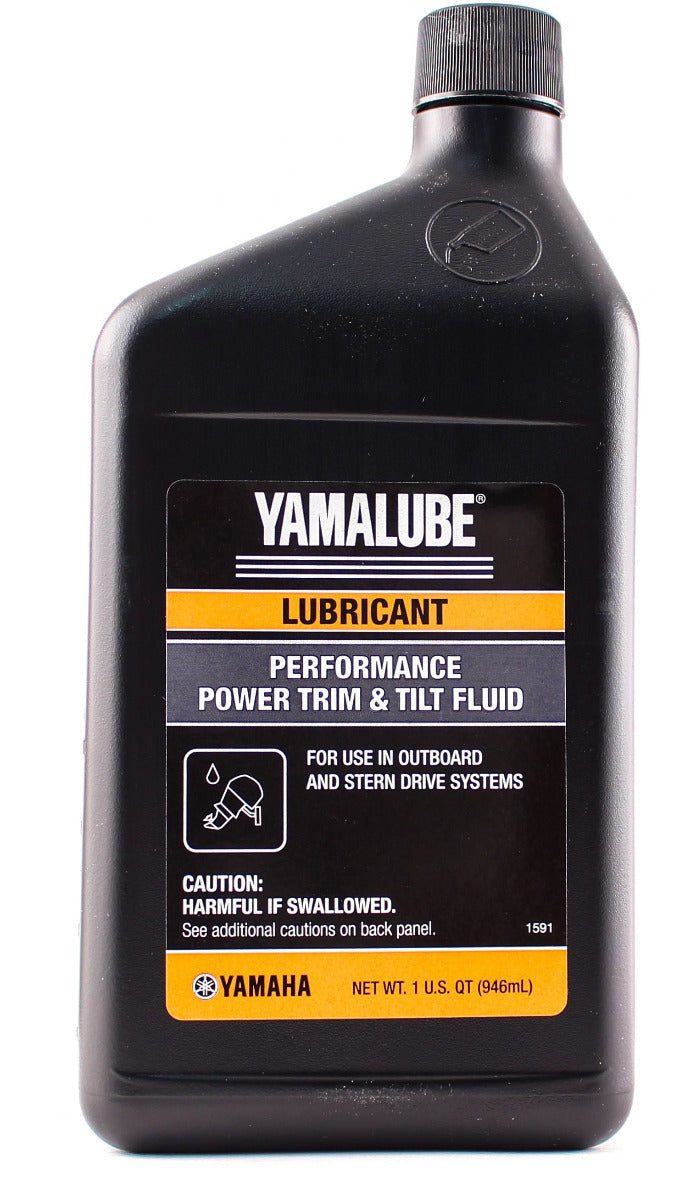


Yamalube Power Trim & Tilt Fluid – ACC-PWRTR-MF-32 (1 Quart)
SKU:
ACC-PWRTR-MF-32
Loading...
Yamalube Power Trim & Tilt Fluid – ACC-PWRTR-MF-32 (1 Quart)
SKU:
ACC-PWRTR-MF-32
$12.26
$13.20
Unit price
/
Unavailable
Oil Weight Guide
Description
Description
The OEM Yamaha tilt and trim fluid for compatible PT&T systems
Yamalube Power Trim & Tilt Fluid, part ACC-PWRTR-MF-32, is Yamaha’s OEM tilt and trim fluid for compatible Yamaha outboard power trim and tilt systems. This 1-quart non-foaming hydraulic fluid helps the trim pump, rams, valves, and seals operate smoothly under high pressure, heat, and marine exposure. Use it when topping off, bleeding, or servicing Yamaha trim and tilt assemblies that call for Yamaha Power Trim & Tilt Fluid. Always confirm the correct fluid type in your Yamaha owner’s manual before mixing or replacing fluid.
Yamaha trim oil, tilt trim fluid, and power trim and tilt fluid all refer to the hydraulic fluid used to raise, lower, and hold the engine angle on compatible Yamaha outboards. The right fluid helps reduce aeration, chatter, pump noise, premature seal wear, and weak trim operation.
At-a-glance details
- Product: Yamalube Power Trim & Tilt Fluid
- Part number: ACC-PWRTR-MF-32
- Container size: 1 US quart
- Fluid type: Non-foaming hydraulic fluid
- Primary use: Compatible Yamaha power trim and tilt systems
- Key benefits: Smooth operation, reduced aeration, heat and pressure resistance, and hydraulic-system protection
What is tilt and trim fluid used for?
Tilt and trim fluid is used inside the hydraulic power trim and tilt system on an outboard motor. The fluid allows the trim pump and rams to raise, lower, and hold the outboard at the correct running or trailering angle. When the fluid is low, aerated, contaminated, or incorrect for the system, the trim unit may become slow, noisy, jerky, or unable to hold position.
Yamalube Power Trim & Tilt Fluid is designed for compatible Yamaha trim and tilt systems that require Yamaha PT&T fluid. Because trim systems, fill positions, and fluid specifications can vary by model and year, always check your Yamaha owner’s manual or service manual before topping off, bleeding, or replacing fluid.
How to check and top off Yamaha power trim and tilt fluid
Use the steps below as general guidance only. The exact fill position and level-check procedure can vary by Yamaha trim unit, so always follow the procedure in your owner’s manual or service manual.
- Park the boat or outboard on a level surface and turn the key off.
- Support the engine safely using the mechanical tilt lock if the engine must be raised for access.
- Clean around the trim and tilt reservoir fill plug before opening it.
- Remove the fill plug slowly, as the system may be under pressure.
- Add Yamalube Power Trim & Tilt Fluid until the fluid reaches the correct level for your model’s reservoir design.
- Reinstall the plug, then cycle the trim up and down several times to help purge trapped air.
- Re-check the level and top off again if needed.
- Inspect the trim rams, seals, hoses, and reservoir for leaks.
Important: Some systems are checked in a raised position, while others may require a different trim position. Do not rely on a universal fill-position rule unless it matches your Yamaha manual.
Safety note: Wear eye protection, keep clear of the propeller, and never place hands near trim rams or moving parts while cycling the trim system.
Signs your Yamaha trim and tilt fluid is low, aerated, or contaminated
Your Yamaha trim and tilt fluid may be low, aerated, or contaminated if the engine raises slowly, lowers unevenly, makes a whining or cavitating pump noise, will not hold its trimmed position, or moves in a jerky motion. Foamy fluid usually indicates air in the system, while milky fluid usually points to water contamination.
- Slow or weak trim movement: May indicate low fluid, air in the system, pump wear, or hydraulic leakage.
- Jerky movement: Often points to aerated fluid, trapped air, or inconsistent hydraulic pressure.
- Pump whine or chatter: May indicate cavitation, air, low fluid, or fluid breakdown.
- Engine creeps down: May indicate internal leakage, worn seals, or valve issues.
- Foamy fluid: Often suggests air in the system.
- Milky fluid: Usually suggests water contamination and should be investigated before continued use.
- Visible leaks: Check trim rams, seals, hoses, reservoir, and fittings.
If the fluid is milky, inspect the trim rams, seals, reservoir, hoses, and fittings for leaks before refilling and returning the system to normal use.
Yamalube PT&T fluid vs. ATF vs. hydraulic steering fluid
Users often search for tilt trim fluid because they want to know whether another hydraulic fluid can be substituted. The safest answer is to follow the exact fluid requirement in the Yamaha owner’s manual for your model and year.
| Fluid type | Use in Yamaha trim & tilt? | Notes |
|---|---|---|
| Yamalube Power Trim & Tilt Fluid | Recommended where specified | Yamaha OEM fluid for compatible power trim and tilt systems. Non-foaming formula supports smooth hydraulic operation. |
| ATF / Dexron-style fluid | Sometimes, model-dependent | Some older Yamaha manuals may list ATF as acceptable. Do not assume compatibility without checking your model-year manual. |
| Generic hydraulic oil | Not recommended unless specified | May not match Yamaha’s seal, viscosity, anti-foaming, or corrosion-protection requirements. |
| Hydraulic steering fluid | Do not substitute unless the manual states otherwise | Trim/tilt systems and hydraulic steering systems may require different fluids. Avoid cross-use unless Yamaha specifically allows it. |
| Brake fluid or transmission fluid not listed in the manual | Do not use | Incorrect fluids can damage seals, cause leaks, or affect hydraulic performance. |
Can you mix Yamaha power trim and tilt fluid with other fluids?
Avoid mixing Yamalube Power Trim & Tilt Fluid with ATF, generic hydraulic oil, steering fluid, or unknown fluid already in the system. If the previous fluid type is unknown or if you are switching fluid types, drain or flush the system according to the service procedure, then refill with one fluid type that matches your Yamaha manual.
When should power trim and tilt fluid be replaced?
Power trim and tilt fluid does not usually need frequent replacement if the hydraulic system is sealed and operating correctly. Check the level at least once per season, before long trips, and anytime the trim becomes noisy, slow, jerky, or weak.
Replace or flush the fluid if it appears milky, foamy, dark, contaminated, or if the trim unit has been opened for seal, hose, pump, ram, or reservoir service. If contamination returns after service, the system should be inspected for leaks or internal component issues.
Maintenance tips
- Check trim and tilt operation before each boating season.
- Inspect rams, seals, hoses, and fittings for leaks or corrosion.
- Wipe away spilled fluid and keep the reservoir area clean before opening.
- Grease trim ram contact points where recommended by Yamaha.
- Do not operate the boat normally if the trim unit is leaking, noisy, or unable to hold position.
FAQs about Yamalube Power Trim & Tilt Fluid ACC-PWRTR-MF-32
What fluid should I use in a Yamaha power trim and tilt system?
Use the fluid specified in your Yamaha owner’s manual or service manual. For compatible Yamaha trim and tilt systems that call for Yamaha Power Trim & Tilt Fluid, ACC-PWRTR-MF-32 is the OEM Yamalube fluid option.
Is ACC-PWRTR-MF-32 Yamaha OEM trim and tilt fluid?
Yes. ACC-PWRTR-MF-32 is Yamalube Power Trim & Tilt Fluid in a 1-quart bottle for compatible Yamaha power trim and tilt applications.
Can I use ATF instead of Yamaha power trim and tilt fluid?
Some older Yamaha manuals may list ATF or Dexron-style fluid as acceptable for certain trim and tilt systems. Do not assume ATF is correct for your model. Check the model-year manual before using or switching fluids.
Can I use hydraulic steering fluid in a trim and tilt system?
Do not substitute hydraulic steering fluid in a trim and tilt system unless your Yamaha manual specifically allows it. Steering and trim systems may have different fluid requirements.
How do I check and top off Yamaha trim and tilt fluid?
Clean the reservoir area, open the fill plug carefully, add the specified fluid to the correct level for your model, reinstall the plug, cycle the trim several times, then re-check the level. Follow the exact fill-position procedure in your Yamaha manual.
How do I bleed air from a Yamaha power trim and tilt system?
After topping off, cycle the trim up and down several times to help move trapped air through the system. Re-check the fluid level and top off again if needed. If the trim remains noisy or jerky, inspect for leaks or service issues.
Why is my trim and tilt fluid milky or foamy?
Foamy fluid usually indicates air in the system. Milky fluid usually indicates water contamination. If fluid looks milky, inspect seals, rams, hoses, and the reservoir before returning the trim system to normal use.
How often should power trim and tilt fluid be replaced?
Check the level at least once per season and anytime trim performance changes. Replace or flush the fluid when it is milky, foamy, dark, contaminated, or after major trim-system service.
How much trim and tilt fluid does a Yamaha outboard take?
Capacity varies by model and trim unit. Fill to the correct level described in your Yamaha owner’s manual, cycle the trim system, and re-check the level as needed.
Specifications
Specifications
-
Specifications-
Reviews
Reviews
EXPLORE THE BLOG
View all-

-

-

-

-
 Yamaha Outboard Break-In Procedure: Exact RPM Schedule, Do’s & Don’ts (First 20 Hours) READ NOW
Yamaha Outboard Break-In Procedure: Exact RPM Schedule, Do’s & Don’ts (First 20 Hours)
Learn the Yamaha outboard break-in procedure: hour-by-hour RPM limits, throttle rules, and pro tips for seating rings (...)
-

-

-