

Yamaha
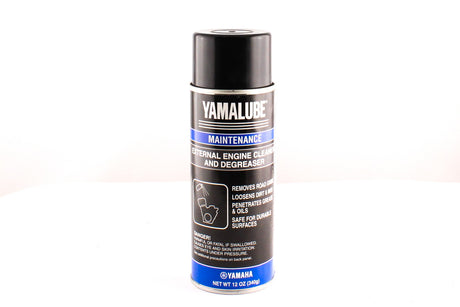
Yamaha ACC-ENGCL-NR-00 - External Engine Cleaner and Degreaser
$11.61 USD$13.49 USDUnit price /Unavailable
Yamaha
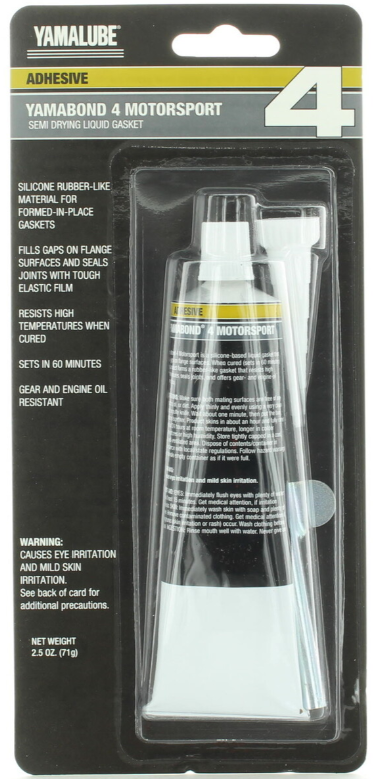
Yamaha ACC-BOND4-MC-00 - Yamabond 4 Motorsport
$19.98 USD$21.99 USDUnit price /Unavailable


Yamaha
Yamaha ACC-YAMAC-PW-GL - Yamaclean Pro-Wash Spray Concentrate
$37.96 USD$42.99 USDUnit price /Unavailable
Yamaha
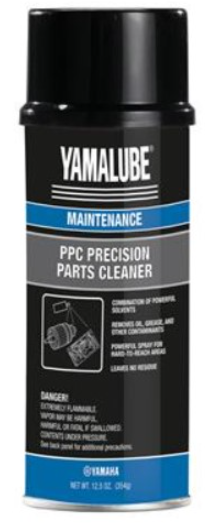
Yamaha ACC-PPCPT-CL-NR - PPC Precision Parts Cleaner
$10.03 USD$10.99 USDUnit price /Unavailable


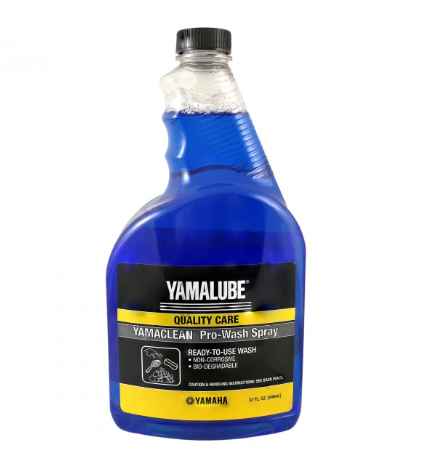
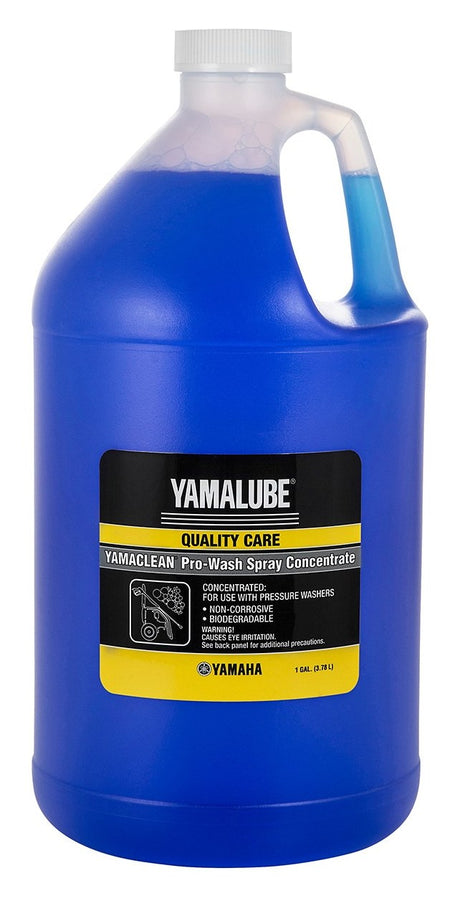
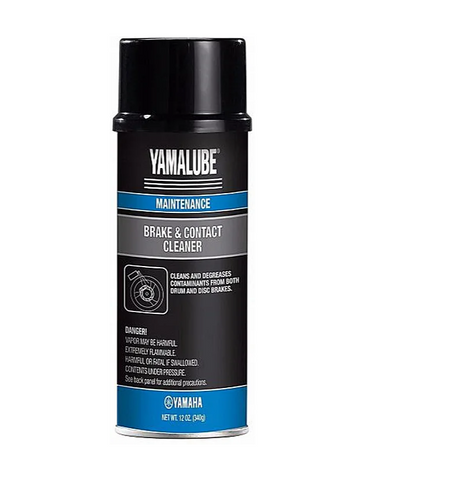
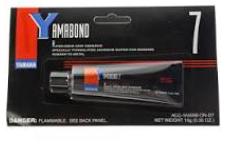

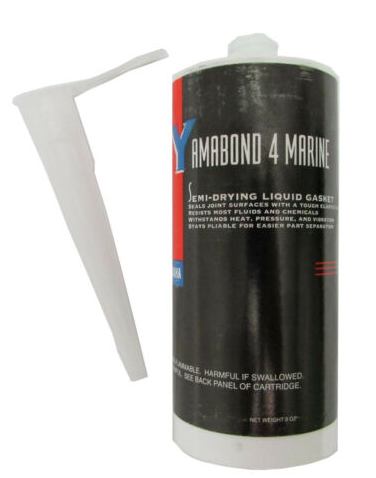
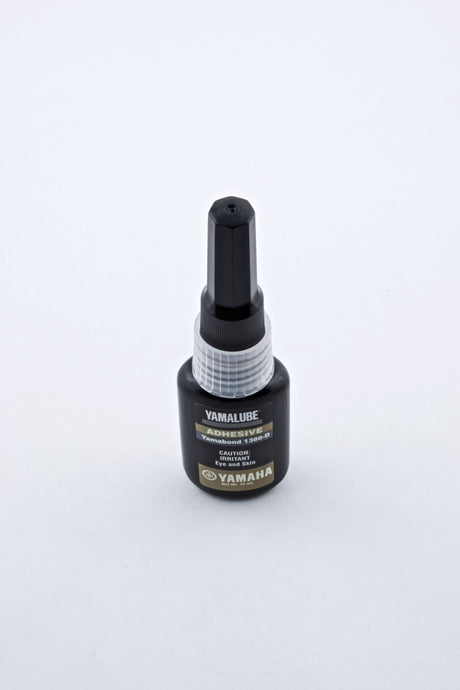
Yamabond & Yamaclean Products
Make sure your Yamaha outboard is in working condition by using YamahaOnlineParts.com's selection of Yamaclean and Yamabond products. For example, you can use Yamaclean Pro-Wash Spray Concentrate in your pressure washer, or Yamabond to seal up any gaps on the flange. The Yamaclean items come in spray bottles or gallon jugs, and the Yamabond ones are available in several sizes.
What is Yamabond?
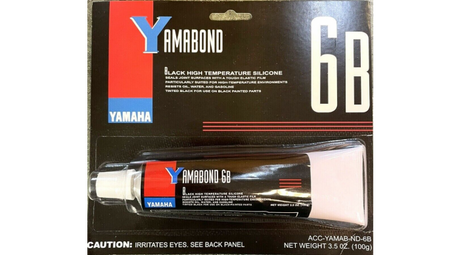
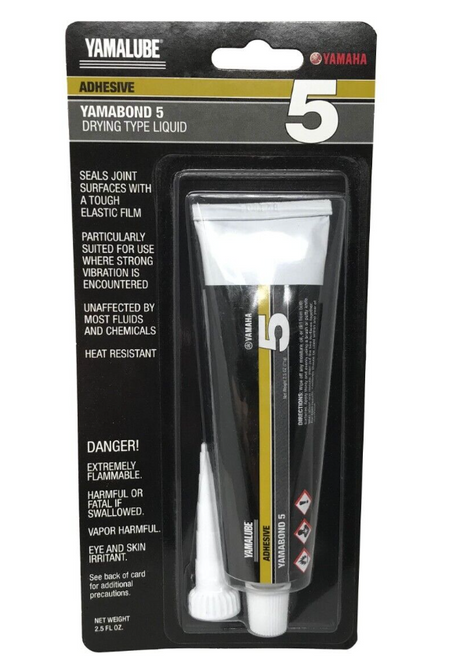
Yamabond is a Yamaha gasket sealant used to create a flexible, oil-resistant seal on engine cases, crankcases, covers, and other mating surfaces. It is commonly used during powersports and marine engine assembly where a durable liquid gasket is needed to resist heat, vibration, oil, and moisture.
Different Yamabond formulas are designed for different sealing jobs, so always choose the sealant recommended for your Yamaha model and application. Yamabond products are often used alongside genuine Yamaha gaskets, cleaners, and service parts during repair or maintenance work.
| Product type | Common use | Best for |
|---|---|---|
| Yamabond sealant | Sealing mating surfaces | Engine cases, covers, crankcases, and repair work |
| Yamaclean products | Cleaning and prep | Removing grime, residue, and buildup before maintenance |
Where to buy Yamabond & Yamaclean
You’re in the right place – browse and purchase Yamabond sealants and Yamaclean cleaners on this collection. Open any product card to see the intended use, container size, and manufacturer instructions.
What to use when
- Yamabond (liquid gasket/sealant): For sealing metal mating surfaces and flanges on engines/gearcases where a flexible, oil- and fuel-resistant gasket film is required. Ideal for case halves, covers, and water-resistant seams when the service manual specifies a liquid gasket.
- Yamaclean (degreaser/cleaner): For salt, grime, and oil on exterior engine surfaces, rigging, trailers, and hull areas. Pro-Wash concentrate is designed for pressure-washer use; follow the label dilution chart.
Tip: Always follow your Yamaha service manual for sealant locations and cure requirements. Clean, dry, oil-free surfaces are essential for reliable sealing.
How to apply Yamabond
- Prep: Degrease mating faces and dry completely. Remove old sealant without gouging.
- Test fit: Dry-fit to confirm alignment and fastener reach.
- Apply: Lay a thin, continuous bead around the sealing path; avoid oil passages.
- Assemble: Bring parts together evenly, torque fasteners in sequence to spec.
- Cure: Allow the manufacturer-specified cure time before operation or fluid fill.
PPE note: Use gloves/eye protection, ventilate the work area, and dispose of wipes/rags per local regulations.
How to use Yamaclean Pro-Wash
- Dilution: Mix per the product label for your washer/output.
- Method: Pre-rinse salt and loose debris; apply from bottom-up to reduce streaking; let dwell briefly, then rinse thoroughly.
- Finish: Dry sensitive areas (under cowl, electrical) and re-protect metal with Yamashield where appropriate.
Leakdown vs. compression
- Compression test: Cranks the engine and measures peak pressure produced by each cylinder – good for a quick health snapshot.
- Leakdown test: Locks each cylinder at top dead center and measures percent leakage using regulated air – pinpoints where sealing is lost (intake, exhaust, rings, head gasket) by listening for air escape.
- When to use: Use compression for routine checks; use leakdown to diagnose low compression or rough-running conditions.
Maintenance cadence
- Corrosion protection: After salt use or washdowns, apply Yamashield to exposed metal and light external components.
- Lubrication: Use Yamalube Marine Grease on specified points (e.g., prop shaft during prop service, steering/tilt points per manual).
- Inspection rhythm: Do quick post-trip checks; follow Yamaha’s 20-hour initial and every-100-hour/annual service intervals listed in your owner’s manual.
To help you service your Yamaha OEM parts and accessories with Yamalube products, we also offer these helpful resources:
- Yamaha outboard engine schematics
- Winterizing Yamaha Outboard Motors - Here's How
- Yamaha Ring Free Plus – Is It Essential?
- Guide to Yamaha Outboard Fuel Filters
Yamaclean and Yamabond Products FAQs
Where can I buy Yamabond and Yamaclean?
On this collection page – open a product card to see the intended use, container size, and instructions.
Which Yamabond should I use?
Match the exact Yamabond type to what your Yamaha service manual specifies for that joint (case halves, covers, etc.). Different formulas have different viscosities and oil/fuel resistance – use only the type called out by Yamaha.
Can I use Yamabond instead of a cut gasket?
Only where the service manual specifies a liquid gasket or a liquid-gasket assist. Some joints require a formed gasket plus spot sealant – don’t substitute unless Yamaha documentation allows it.
How do I dilute Yamaclean Pro-Wash for a pressure washer?
Follow the mix ratio printed on the label for your washer’s flow rate and the level of soiling. Rinse thoroughly after dwell.
Leakdown or compression – what should I do first?
If the engine runs but feels off, start with compression. If one cylinder is low (or results vary), a leakdown test helps identify whether loss is through rings, valves/reeds, or gasket sealing.
How do I protect my Yamaha outboard motor?
Accumulated grime, oil, salt deposits, rust, and corrosion can all be detrimental to your Yamaha outboard. It is important to regularly clean and shield your outboard to keep it running properly and at its best. By carrying out regular maintenance, you can restore any lost engine power, maximize effectiveness, guard against the destructive effects of corrosion, and guarantee that your Yamaha outboard has a long and healthy lifespan.
The marine environment is one of the most severe in the world, which is why it is vital to take care of your Yamaha outboard engine. We suggest using Yamashield Rust & Corrosion Protectant for the best protection against rust and corrosion. This item is an amalgamation of solvents, lubricants, and waxes formulated by Boeing Aviation, and it has the capacity to clean, lubricate, and protect your Yamaha outboard motor.
Yamashield has the power to combat corrosion and forms an unbreakable bond with metal for a prolonged period of lubrication. This one-for-all solution is ideal for all motor components, including wiring, straps, and electronics. Furthermore, it can be used on paint, plastic, rubber, fiberglass, and vinyl.
Yamalube Marine Grease is specially formulated for marine use and has a strong resistance to water. It is essential for keeping your Yamaha outboard in good condition, providing outstanding lubrication and maintaining a tight grip on all of the engine's movable components, regardless of the vibration from the engine. Additionally, we highly suggest utilising Yamalube Marine Grease for the propeller shaft.
What is a Yamaha outboard leakdown test used for?
To assess the state of each cylinder and the whole motor of a Yamaha outboard motor, a leakdown test is done. This procedure is much like a compression test, where the air is forced into each cylinder, and the pressure that is dropped after a certain amount of time is estimated through a pressure gauge.
A leakdown test of an engine requires one to pay attention to the sounds of the cylinders and their respective surroundings in order to detect any potential leaks.
The purpose of a pressure test is to determine if there are any air leaks in the motor. When air is either present or absent in engines, it can result in the leaking of fuel-air mixtures and the spilling of fuel while the motor is running.
When fluids from the surrounding environment seep into these openings, it can create a number of problems, including inner corrosion, lack of responsiveness (either when the engine is stationary or running at low or high speeds), and other difficulties.
How do I perform a leakdown test on my Yamaha outboard engine?
- Start by taking off the top Yamaha shielding cover and afterward, take out the spark plug casing situated at the back of the engine.
- Take out the spark plugs and make sure to arrange them in numerical sequence for when you need to put them back in or exchange for new ones.
- Take the flywheel cover off from the engine's upper part.
- Utilizing a marker, label the flywheel at the 0°, 120°, and 240° points. These markings will represent the locations to which each set of cylinders need to be turned to reach their top-dead-center spots (see Steps #11 and #12).
- Utilizing a ratchet and socket, turn the crankshaft of the Yamaha Yamaha cylinder #1 to the highest point of its stationary position.
- To ensure an accurate reading, adjust the regulator on the leak down tester to zero percent.
- Attach the leak-down tester to the spark plug port of the first cylinder by screwing it in place. Then, link the tester up to the compressor and take the reading. Be certain to grasp the crankshaft tightly so that it won't spin.
- Turn the crankshaft in a complete circle so that the Yamaha cylinder number 4 is situated at the highest point of its stroke.
- Attach the leak-down tester to the fourth cylinder before stopping the crankshaft from turning and recording the measurement.
- Move the third cylinder of the Yamaha engine up to the highest point where it stops and make sure it is at the 120° mark. Afterward, repeat the seventh to tenth steps for the third and sixth cylinders of the Yamaha motor.
- Position cylinder #2 to the highest point of inactivity at 240°. Afterward, repeat steps 7 to 10 for Yamaha cylinders #2 and #5.
- Taking out and putting in components is the same process. It is important to make sure to change the spark plugs in a sequence and use an anti-seize substance on the threads to ensure it can be taken out and put back in quickly. Additionally, ensure that the ignition cables are firmly secured to make sure the connection is good.
Are Yamaha Outboard Motor Covers Worth the Investment?
We understand that you may have doubts about whether investing in a Yamaha outboard motor cover is really necessary. This can be seen in different ways, but in other ways, it is quite clear. For instance, if you want your Yamaha outboard's cowling to stay looking new and glossy, then the cover is a must. Additionally, it is an essential part of safeguarding your engine, just like the skin on our bodies protects our internal organs. The cowling serves the same purpose for the engine, offering a barrier against the elements.
Just like our skin is subject to the effects of the sun, environmental contamination, and other wounds, so is the cowling of your boat. In the south, ultraviolet rays are particularly powerful. Boats and their engines often endure the Florida sun for most of the year. In the northern states, the boats may not be out of the water for as many months as in the south and the UV rays are usually not as intense, however, it can still cause harm. Another factor that can damage the cowling is towing trailers.
As you drive down the highway, your cowling is likely to be hit by pebbles, stones and other objects, which can cause scratches and dents. In more severe cases, it could cause cracks and punctures in the Yamaha cowling.
The elements of the environment, such as sea spray and acid rain, may come into contact with your cowling at some point. While Yamaha outboard covers cannot totally prevent such issues, they do offer a great deal of help.
These covers are constructed using a robust SurLast solution-dyed polyester fabric which offers reliable protection from the marine atmosphere. It is non-abrasive, water-resistant, and able to resist UV rays, mold, and mildew. Additionally, the covers are designed to fit the exact model of your Yamaha outboard engine.
When your Yamaha outboard motor is left exposed to the elements, it is prone to becoming damaged due to the effects of the sun, debris, and other environmental factors. This is why we believe it is wise to consider the risk vs. reward before investing in a protective cover for it while it is docked, on a lift, in storage, or in transit.
Cost of Yamaha outboard motor covers: $35 to $152, depending on engine size
Cost of a new Yamaha top cowling assembly: $300 to $1,900
Cost of refurbishing and repainting a Yamaha cowling: $350 to $750
Cost of Yamalube Marine Spray Paint: About $21 to $45, depending on engine size
Cost of Yamaha OEM replacement decals: $62 to $130
Cost of your time: Add your own dollar amount here.
We think that investing in a cover for your Yamaha outboard motor is a worthwhile expense, but the decision is ultimately up to you. To ensure your Yamaha is properly maintained, it's important to use genuine Yamaha outboard parts and products. Yamaha Online Parts is here to help you with this.
Make sure your Yamaha outboard is in working condition by using YamahaOnlineParts.com's selection of Yamaclean and Yamabond products. For example, you can use Yamaclean Pro-Wash Spray Concentrate in your pressure washer, or Yamabond to seal up any gaps on the flange. The Yamaclean items come in spray bottles or gallon jugs, and the Yamabond ones are available in several sizes.